Salt Air, Rust, and Corrosion: The Hidden Enemy of Safety Equipment
12/25/20252 min read
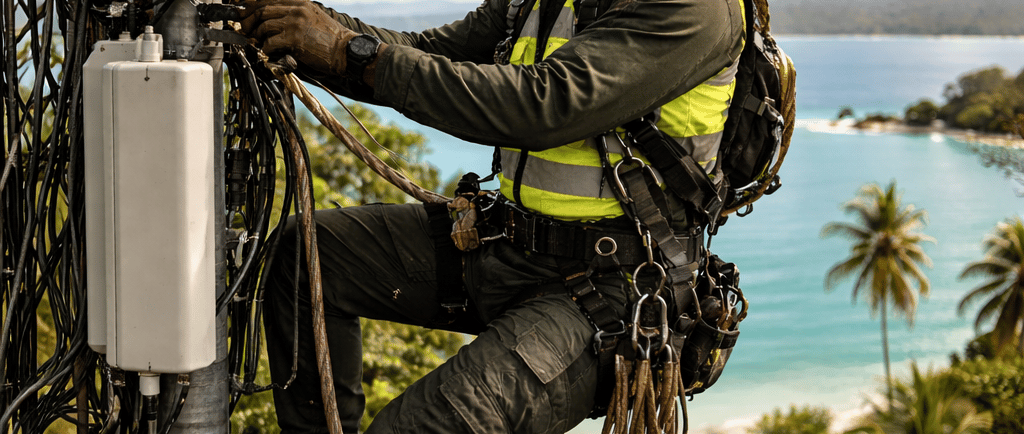

When people think about workplace hazards, they picture height, electricity, heavy machinery, or weather.
What they don’t see — and often underestimate — is corrosion.
In coastal and island environments, salt air is a silent threat. It works slowly, constantly, and without warning. And over time, it can compromise even equipment that looks “fine” at a glance.
At Turtel Armor™, we take corrosion seriously because we know this truth:
Safety gear doesn’t fail loudly.
It fails quietly — until the moment you need it most.
Why Salt Air Is So Dangerous to Safety Gear
Salt in the air accelerates oxidation. When salt particles settle on metal surfaces, they attract moisture and create the perfect environment for rust and corrosion to form.
Unlike sudden damage, corrosion:
Builds gradually
Often starts inside hardware and joints
Weakens equipment long before it looks damaged
This makes it one of the most dangerous threats to PPE in coastal regions.
The Environments Most at Risk
Salt air corrosion is especially aggressive in:
Coastal construction sites
Telecom and utility work near the sea
Island-based infrastructure projects
Ports, marinas, and industrial waterfronts
Tropical climates with high humidity
In these environments, standard safety equipment degrades faster than expected.
How Corrosion Compromises Safety Equipment
1. Weakening of Load-Bearing Hardware
Carabiners, D-rings, buckles, and connectors rely on precise tolerances and material strength. Corrosion:
Reduces metal cross-section
Creates micro-cracks
Weakens load ratings over time
A corroded connector may still “look” intact — but its strength is no longer guaranteed.
2. Hidden Failure Points
Rust often forms:
Inside buckles
Under coatings
At stitching anchor points
Inside springs and locking mechanisms
These are places the eye doesn’t easily inspect — but where failure is most likely.
3. Stiff or Malfunctioning Components
Corrosion causes:
Stiff buckles
Slow or incomplete locking
Reduced shock absorber performance
Hardware that no longer moves freely
In fall protection systems, smooth operation isn’t optional — it’s critical.
Why Cheaper Equipment Fails Faster in Salt Air
Budget safety gear often uses:
Lower-grade steel
Minimal protective coatings
Inconsistent plating thickness
Cost-cut hardware
In salt-rich environments, these shortcuts show quickly.
What might last years inland can degrade in months near the coast.
The Advantage of Non-Metal & Corrosion-Resistant Materials
This is where modern safety design matters.
High-quality equipment minimizes corrosion risk by using:
Composite and non-metal components where possible
High-grade alloys with better corrosion resistance
Proper coatings and finishes
Designs that reduce moisture trapping
Less metal exposure means fewer failure points.
Inspection Becomes Even More Critical
In coastal environments, inspection schedules must be stricter.
Workers should regularly check for:
Discoloration or pitting on metal
Rough or sticky hardware movement
Flaking coatings
Stiff buckles or connectors
Any change in how equipment feels or operates
If there’s doubt — replace it. Corrosion doesn’t reverse.
Why Turtel Armor™ Designs for Coastal Reality
Turtel Armor™ is built with island and coastal work in mind. Our approach is shaped by professionals who operate daily in:
Heat
Humidity
Salt air
Long shifts near the sea
We design safety gear that resists corrosion not because it looks good on a spec sheet — but because real-world conditions demand it.
When your life depends on a connector, “good enough” isn’t enough.
The Takeaway
Salt air doesn’t announce itself.
Rust doesn’t give warnings.
Corrosion doesn’t care how new your gear looks.
In coastal environments, the biggest threat to safety equipment is often invisible — until it’s too late.
Choosing corrosion-resistant, well-designed safety gear isn’t about durability alone.
It’s about trust.
Built to protect the breadwinners that build our world.
Turtel Armor
Built to protect the breadwinners that build our world.
Contact
Newsletter
info@turtelarmor.com
1-1876-555-1234
© 2025. All rights reserved.